

How to Create a Preschool Learning Space at Home Without Turning It Into a Classroom
Many parents picture a preschool learning space as a miniature classroom: a child-sized desk, rows of educational toys, colorful posters, and perhaps an entire room dedicated to learning. But young children do not need a classroom at home. They need an environment that makes it easy to explore, read, create, organize, and take part in everyday activities.
The best learning space at home may be much simpler than you expect. A quiet corner of the living room, a low bookshelf, a small table for art, and accessible toy storage can be enough to create a useful preschool learning space. The goal is not to make your home look educational. It is to make learning and play easier for your child to manage independently.
Start Small: One Learning Corner Is Enough
You do not need a spare bedroom or a large playroom to create a preschool learning space at home. A corner of the living room, bedroom, or dining area can work just as well when it is organized around your child's everyday activities.
Start by looking for a spot that is reasonably quiet and away from the busiest paths through the home. It does not have to be completely silent. A little background activity can actually help the space feel like part of family life rather than a separate classroom.
What matters most is what your child can do there. Keep frequently used books, puzzles, drawing materials, or favorite activities within easy reach. If your child likes drawing or looking through picture books, a small Kids Desk and Chair can give those activities a consistent home.
For families with limited space, flexibility matters. The same table might be used for breakfast in the morning, drawing in the afternoon, and puzzles before dinner. A small basket of books can turn the end of a sofa into a temporary reading corner. You do not need to assign every activity its own piece of furniture.
The purpose of a toddler learning space is simply to create a clear, inviting area where children know what they can do. Once the setup is familiar, they can begin choosing activities without waiting for an adult to prepare everything.
Design the Space From Your Child's Perspective
When arranging a preschool learning space, it is easy to start with appearance. Parents may wonder whether the colors coordinate or whether the room looks organized enough for photographs.
A more useful question is: Can my child actually use this space?
Try looking around from your child's height. Can they reach their favorite books? Can they choose an activity without asking for help? Can they see where toys belong when playtime is over? Can they sit comfortably at the table?
These questions are more important than whether the room resembles a traditional classroom.
| Adult-Focused Space | Child-Friendly Learning Space |
|---|---|
| Materials are stored out of reach | Frequently used materials are accessible |
| Toys are displayed mainly for decoration | Activities are easy for children to choose |
| Adults decide what to use and when | Children can make simple choices |
| Cleanup depends on parents | Storage makes cleanup easier to manage |
| Furniture is chosen mainly for appearance | Furniture fits the child's size and activities |
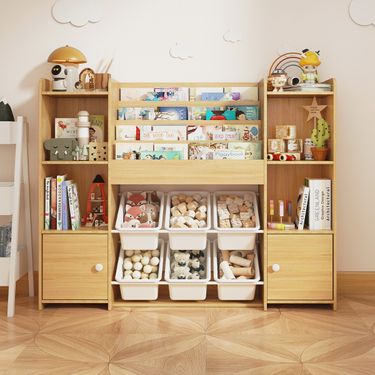
This is where child-sized furniture can make a practical difference. A toddler bookshelf, open shelf, or accessible storage unit is useful because it changes what a child can do without assistance.
For example, a front-facing bookshelf lets a child see book covers and choose a story independently. Open toy storage makes it easier to find a familiar activity and return it afterward. A low storage shelf can make cleanup more understandable because the destination of each item is visible.
Accessibility does not mean putting everything within reach. Some materials still need adult supervision or should be stored higher up. The idea is to make appropriate activities accessible while keeping the environment safe and manageable.
Labebe's Montessori-inspired furniture can support this approach with child-friendly desks, bookshelves, and storage solutions that fit naturally into everyday home environments.
Create Four Simple Learning Zones
Once you have chosen a location, think about activities rather than school subjects. A small preschool learning space can support several types of learning without becoming crowded. You do not need four separate rooms—or even four clearly separated areas. A few defined spots can help children understand where different activities happen.
| Learning Zone | Purpose | Suggested Furniture |
|---|---|---|
| Reading Corner | Quiet reading and story time | Bookshelf |
| Art Station | Drawing, painting, and making | Art Table + Easel |
| Pretend Play Area | Imagination and social interaction | Play Kitchen |
Reading Corner
A reading corner for kids does not need a huge book collection. A comfortable place to sit, a small selection of books, and a low bookshelf can be enough.
Place books where your child can see and reach them. Front-facing storage can be especially useful for younger children because the covers are easier to recognize than rows of book spines.
You can also change the selection occasionally. A few familiar favorites mixed with two or three less frequently read books can keep the area interesting without creating visual clutter.
Art Station
A kids art station gives children a consistent place to draw, paint, cut, or make simple crafts. A child-sized art table or desk can help define the area and make creative activities feel easy to begin.
Keep only age-appropriate materials within independent reach. Crayons, paper, and washable supplies might stay accessible, while materials that require closer supervision can remain with an adult.
Just as importantly, make cleanup part of the setup. A small container for crayons and a designated place for paper can help children understand that creating something also includes taking care of the materials afterward.
Pretend Play Area
Pretend play gives children a place to recreate familiar experiences and invent their own scenarios. A play kitchen might become a restaurant, bakery, family kitchen, or imaginary shop depending on the day.
A defined pretend play area does not need dozens of accessories. A simple setup with enough open space to move around can encourage children to develop their own games rather than simply moving from one toy to another. It can also be useful to keep pretend-play materials together. When children know where the dishes, food, or utensils belong, they can gradually take more responsibility for organizing the area.
Keep the Space Organized Without Filling It With More Toys
Good preschool room organization is not about having more storage or displaying every toy at once. Too many visible choices can make it harder for children to focus and can quickly make the space feel cluttered.
Organize materials by activity: keep puzzles together, give art supplies their own area, and store pretend-play accessories in one place. Open shelves and accessible bins make toy organization easier because children can see what is available and where things belong. Toy rotation can also keep the selection manageable by putting some activities away and bringing them back later.
Most importantly, make cleanup part of the space. When books, blocks, and creative materials each have an obvious home, children can gradually learn to put things away after use. A successful learning space at home does not need to look perfect—it simply needs to be easy for children to use and maintain.
Preschool Learning Space Checklist
Before you finish your learning space at home, look at it from your child's perspective. Does the setup make everyday activities easier to choose, use, and put away?
✓ Child-sized furniture that fits the intended activities
✓ A comfortable reading corner with accessible books
✓ An open bookshelf or storage shelf
✓ A simple art station with age-appropriate supplies
✓ A defined pretend play area
✓ Accessible toy storage for frequently used materials
✓ Comfortable lighting without unnecessary visual clutter
✓ Enough open space for children to move and play
✓ A simple daily cleanup routine
You do not need to check every box immediately. Start with the activity your child already enjoys most, then adjust the space as you learn what works for your family.
Conclusion
A successful preschool learning space is not the one that looks most like a classroom. It is the one your child can actually use.
Focus on accessibility rather than decoration, and on everyday activities rather than filling the room with educational products. A small reading corner, accessible storage, creative table, or simple pretend play area can provide meaningful opportunities for children to explore independently.
Labebe's Montessori-inspired furniture can help families create these child-friendly environments without turning the home into a classroom. The best space is one that grows alongside your child and makes everyday learning feel natural.
Join labebe today and unlock your welcome discount — a little gift for your little one!

©2025 labebe All Rights Reserved.