

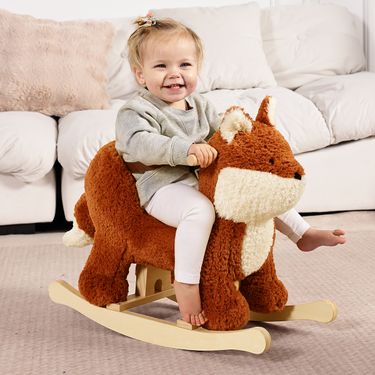
What Age Is a Rocking Horse For?
Most rocking horses are suitable for children between 12 months and 3 years old, although the correct age depends on the manufacturer's recommended age range and your child's developmental readiness. A child should be able to sit independently, hold the handles securely, and maintain balance before using a rocking horse safely.
Rather than choosing a rocking horse based on age alone, parents should also consider developmental milestones, product dimensions, weight limits, and safety certifications. These factors together determine whether a rocking horse is appropriate for a particular child.
A well-designed rocking horse is more than a fun toy. It encourages balance, coordination, muscle development, and imaginative play while giving toddlers a safe way to build confidence through movement. However, selecting the right model at the right stage is essential for both enjoyment and safety.
What Age Is a Rocking Horse Usually For?
Manufacturers usually recommend different age ranges based on a child's physical development, the size of the rocker, and its overall design.
Most manufacturers classify their products into age groups such as 12M+, 18M+, 2Y+, or 3Y+. These recommendations are based on factors including seat height, stability, weight capacity, and the physical abilities typically seen at each developmental stage.
In general:
| Child's Age | Typical Suitability |
|---|---|
| Under 12 months | Usually not recommended unless specifically designed for infants |
| 12-18 months | Suitable only if the child can sit independently and under adult supervision |
| 18 months-3 years | Ideal age for many toddler rocking horses |
| 3+ years | Suitable for larger models designed for older children |
As children grow, their balance, coordination, leg strength, and confidence improve. Choosing a rocker that matches these developmental milestones helps reduce the risk of tipping while allowing children to enjoy independent play.
A child's ability to control their body is far more important than their birthday. Two toddlers of the same age may have very different levels of balance and coordination.
For this reason, parents should never ignore the manufacturer's instructions. If a product specifies 3 years and up, it should not be treated as a rocking horse for 1 year old, even if the child seems physically advanced.
Organizations such as the American Academy of Pediatrics (AAP) also recommend using age-appropriate toys that match a child's developmental abilities rather than simply their chronological age. Following these recommendations helps reduce unnecessary injury risks and supports healthy play.
Can a 12 Month Old Use a Rocking Horse?
A rocking horse for 12 month old children may be appropriate in some situations, but only under close adult supervision.
According to pediatric developmental milestones published by the U.S. Centers for Disease Control and Prevention (CDC), many babies around 12 months begin sitting confidently, pulling to stand, cruising, and taking their first independent steps. However, development varies from child to child.
If your child can sit independently, hold the handles securely, and maintain good balance while seated, they may be ready for a low-profile rocking horse designed for this age group.
However, adults should always help children get on and off the rocker. Gentle rocking is preferable, and the toy should never be placed on uneven flooring.
Parents should avoid products with:
- High seats
- Large rocking arcs
- Narrow bases
- No footrests
- No side protection when needed
If your child still struggles to sit steadily or frequently tips sideways, waiting another few months is usually the safer decision.
Even when a product is marketed as a rocking horse for 12 month old children, parents should confirm that both the recommended age and their child's physical readiness match before allowing independent use.
Is 18 Months a Good Age for a Rocking Horse?
For many families, 18 months is one of the best times to introduce a rocking horse.
At this stage, toddlers generally have stronger core muscles, improved balance, and better coordination. Many children can climb onto low furniture with assistance and begin understanding simple cause-and-effect relationships.
An appropriate rocking horse for 18 month old toddlers often allows them to:
- Climb on with minimal assistance
- Grip handles confidently
- Push themselves into a gentle rocking rhythm
- Explore independent movement safely
This age is also when imaginative thinking begins to develop rapidly.
Instead of simply sitting on the rocker, children may pretend they're riding through a forest, visiting a farm, or racing across open fields. These simple role-playing activities help develop creativity, language, and emotional expression.
Repetitive rocking motions may also help children develop vestibular awareness, which plays an important role in balance, posture, and spatial orientation during early childhood.
When shopping for a toddler, look for features such as:
- Low seat height
- Wide, stable rocker base
- Easy-to-grip wooden handles
- Comfortable seating
- Footrests for additional stability
These characteristics provide a safer experience while encouraging independent exploration.
Are Rocking Horses Good for 2 Year Olds and Toddlers?
Yes. A rocking horse for 2 year old children is often one of the most engaging developmental toys available.
By age two, toddlers usually have greater confidence in movement and longer attention spans. Rather than simply rocking back and forth, they often incorporate the toy into imaginative storytelling.
For example, a plush rocking horse for toddlers might become a trusted adventure companion during one play session and a favorite farm animal or magical unicorn during the next. As children's imaginations grow, the same rocking horse can inspire different stories, encouraging creativity, language development, and pretend play every time they ride.
Pretend play is more than entertainment. According to child development specialists, imaginative play supports language development, emotional regulation, problem-solving, and social skills.
As children become more energetic, however, safety remains essential.
Parents should remind children:
- Sit properly on the seat.
- Hold both handles while rocking.
- Never stand on the rocker.
- Avoid excessive or aggressive rocking.
- Use only on flat indoor surfaces unless otherwise specified.
For older toddlers, checking the weight limit becomes increasingly important. Choosing a model that matches both height and weight ensures better stability and longer product life.
When Is a Child Too Young for a Rocking Horse?
Sometimes the better question isn't "what age is a rocking horse for?" but rather "when is my child not ready?"
A child may still be too young if they:
- Cannot sit independently.
- Cannot grip handles securely.
- Frequently fall sideways while seated.
- Become frightened by gentle rocking.
- Are too small to sit comfortably on the seat.
- Do not meet the manufacturer's recommended age.
Even if parents are eager to encourage early play, introducing a rocker before a child is physically prepared may reduce confidence instead of building it.
Waiting until your child demonstrates stronger balance and body control usually leads to a more enjoyable experience.
How to Check the Rocking Horse Age Range Before Buying
Before buying a rocking horse, parents should compare several factors instead of looking at the recommended age alone. The following checklist can help you choose a model that matches your child's size, development, and safety needs.
What to Check Before Buying
- Recommended age: Always follow the manufacturer's stated rocking horse age range rather than guessing based on your child's age.
- Weight capacity: Children grow at different rates, so check the maximum weight to ensure the rocker remains stable.
- Seat height: Your child's feet should comfortably reach the footrests or sides for better balance and control.
- Stability: Look for a wide rocker base with a smooth rocking motion to reduce the risk of tipping.
- Safety features: Rounded edges, sturdy handles, footrests, and durable construction all contribute to safer everyday use.
- Safety certifications: Products tested to standards such as ASTM or EN71 provide additional reassurance for parents.
- Customer reviews: Reading feedback from other families can reveal useful information about durability, assembly, and long-term use.
Remember that no single rocking horse is right for every child. The best choice is one that matches your child's age, physical development, and the manufacturer's recommendations while providing the stability and safety features needed for everyday play.
What Age Are Labebe Animal Rockers For?
Most Labebe animal rockers are designed for toddlers, with different models suitable from around 12 months to 3 years and older. The appropriate age depends on the size, seat height, and design of each rocker rather than the brand itself.
Instead of choosing based on age alone, compare the recommended age range, weight capacity, and product dimensions on each product page. This helps ensure the rocker matches your child's current stage of development and provides a comfortable, stable riding experience.
Labebe offers a variety of plush and wooden animal rockers with different sizes and themes, making it easier for parents to choose a model that fits both their child's age and interests.
Conclusion
Choosing a rocking horse that matches your child's developmental stage is more important than focusing on age alone. By following the manufacturer's recommendations and selecting the right size, parents can provide a safer and more enjoyable riding experience.
If you're looking for thoughtfully designed rocking horses that prioritize child development, safety, and imaginative play, Labebe offers a wide selection of age-specific animal rockers and toddler toys. Always review the recommended age range on each product page to choose the model that best fits your child's stage of growth.
FAQs
What age is a rocking horse for?
Most rocking horses are designed for children between 12 months and 3 years or older, depending on the individual product. Always follow the manufacturer's recommended age range.
Is a rocking horse safe for a 1 year old?
A rocking horse for 1 year old children can be safe if the child sits independently, the rocker is designed for that age, and an adult provides close supervision.
What is the best rocking horse for toddlers?
A rocking horse for toddlers should have a stable base, low seat height, sturdy handles, footrests, and an age recommendation that matches the child's development.
Is 18 months a good age to start?
Yes. Many children at 18 months have sufficient balance and coordination to enjoy a rocking horse for 18 month old toddlers with greater independence.
Can a 2 year old still use a rocking horse?
Absolutely. A rocking horse for 2 year old children often supports imaginative play, balance, and active movement. Just make sure the child remains within the recommended weight and height limits of the product.
Join labebe today and unlock your welcome discount — a little gift for your little one!

©2025 labebe All Rights Reserved.