


Baby Rocker vs Rocking Horse: What’s the Difference for Babies and Toddlers?
When comparing baby rocker vs rocking horse, the biggest difference is the child's developmental stage. A baby rocker is designed for young infants during supervised awake time, while a rocking horse is a ride-on toy for older babies and toddlers who can sit independently. Although both use a gentle rocking motion, they serve very different purposes as children grow.
Many parents confuse these products because their names sound similar. However, choosing the right option depends less on the name and more on your child's physical development, sitting ability, and intended use. Selecting a product that matches your child's stage can help support safe, enjoyable, and age-appropriate play.
According to guidance from organizations such as the American Academy of Pediatrics (AAP) and the Consumer Product Safety Commission (CPSC), caregivers should always follow manufacturer instructions, age recommendations, and safety guidelines when using infant seating products or ride-on toys. In this guide, we'll compare the key differences between a baby rocker and a rocking horse, explain when each is appropriate, and help you choose the best option for your child.
What Is a Baby Rocker?
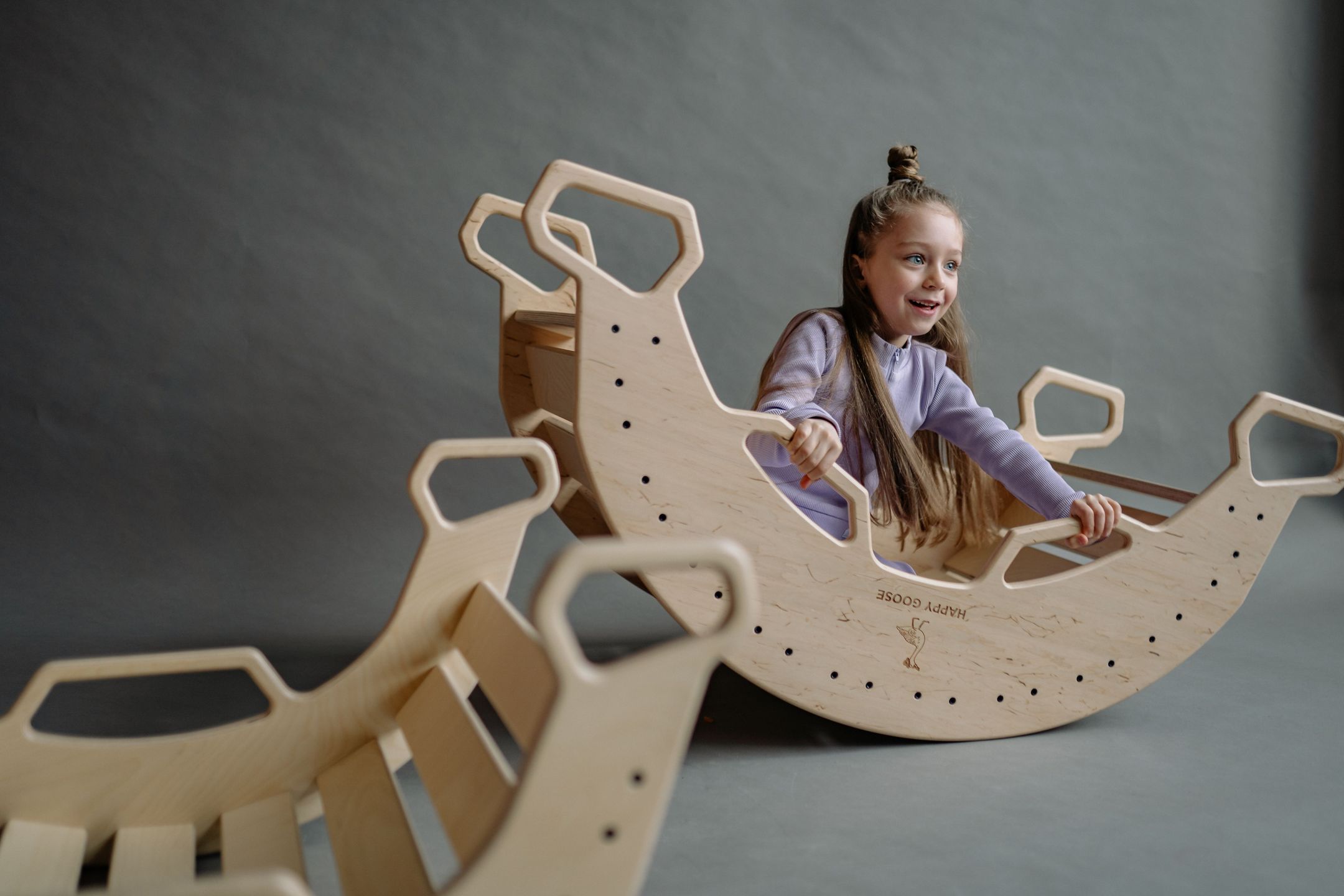
A baby rocker, also known as an infant rocker or infant rocker chair, is a lightweight seat designed to comfortably support young babies during short periods of supervised awake time.
Unlike ride-on toys, a baby rocker supports an infant in a semi-reclined position. The seat is designed to help distribute body weight comfortably while keeping the baby securely fastened with a harness.
While features vary by brand, most baby rockers share several common characteristics. Most baby rocker models include features such as:
- A semi-reclined ergonomic seat
- Safety harness
- Soft fabric padding
- Toy bar with hanging toys
- Gentle vibration or calming music (on some models)
- Lightweight frame for easy movement around the home
These features are designed to keep babies entertained for short periods while parents remain nearby. A baby may enjoy watching hanging toys, listening to music, or simply observing family activities from a comfortable position.
One important point to understand is that a baby rocker is not an interactive riding toy. Babies do not climb onto or actively propel the seat. Instead, the rocker provides passive comfort while supporting early sensory development and visual engagement.
Parents should also remember that even though some babies may fall asleep in an infant rocker, these products are not intended for routine sleep. The inclined seating position differs from the flat, firm sleep surface recommended by pediatric sleep experts.
Most manufacturers also specify weight limits and developmental milestones for using an infant rocker. Once babies become stronger, begin sitting independently, or attempt to climb out, it is generally time to transition to more age-appropriate products.
Common Uses of a Baby Rocker
Parents often use a baby rocker while preparing meals, reading books nearby, or interacting face-to-face with their baby.
A baby rocker may be useful for:
- Short supervised awake sessions
- Keeping babies comfortably nearby during family activities
- Gentle soothing before feeding or playtime
- Providing visual stimulation through attached toys
- Temporary seating while caregivers interact with the baby
It should never replace tummy time, floor play, or caregiver interaction, all of which are essential for healthy physical and cognitive development.
What Is a Rocking Horse?
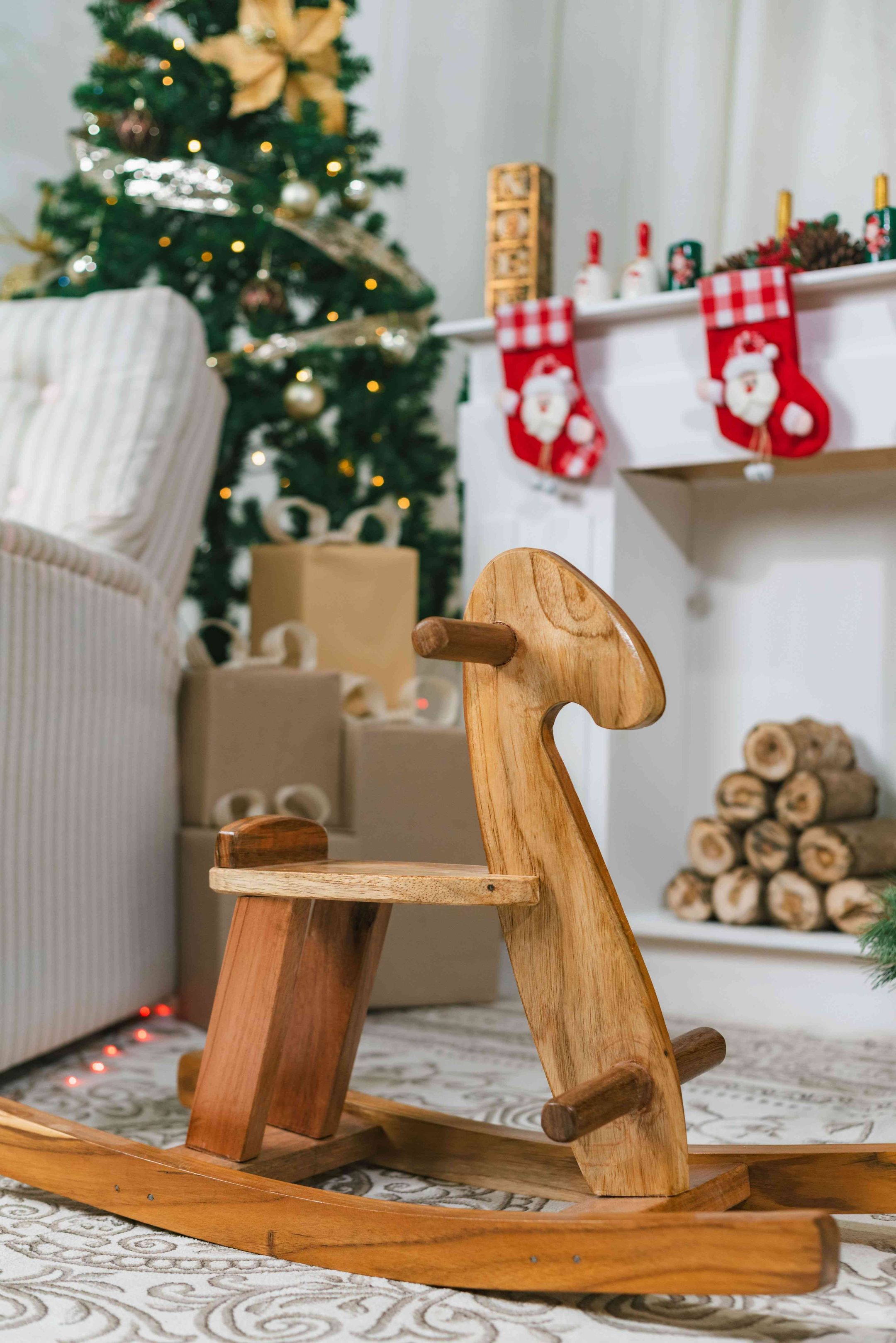
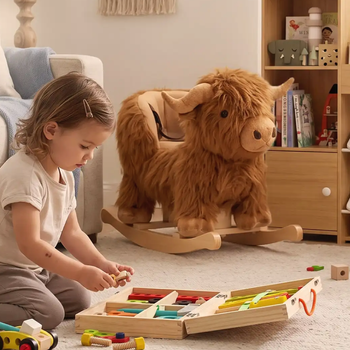
A rocking horse is a ride-on toy designed for babies and toddlers who have developed enough strength and balance to sit upright independently.
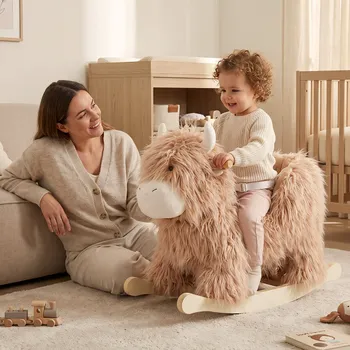
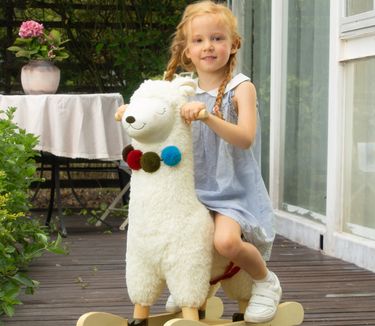
Traditional rocking horses have existed for centuries, but modern versions come in many styles. Some resemble classic wooden horses, while others feature plush animals such as elephants, unicorns, llamas, dinosaurs, or other friendly characters. These plush versions are often referred to as toddler rocking horses or plush animal rockers.
Regardless of appearance, they all belong to the broader category of rocking horse toys because children sit on top of them and create the rocking motion through their own body movement.
A typical rocking horse for toddlers includes:
- An upright riding position
- Stable curved wooden rocking base
- Easy-to-hold handles
- Footrests or a wide base for stability
- Soft plush covering or wooden construction
- Ride-on design for active play
Unlike an infant rocker, a baby rocking horse requires children to engage their core muscles, maintain balance, grip the handles, and coordinate their body movements while rocking.
This active play provides more than entertainment. Research on early childhood development consistently shows that movement-based play helps children practice balance, body awareness, muscle control, and coordination. Pretend play also supports creativity, language development, and social-emotional growth.
Many parents choose a rocking horse for toddlers around the first birthday because it offers longer-lasting play value than infant seating products. As toddlers grow, they often incorporate rocking horses into imaginative games, pretending to ride through forests, farms, or magical adventures.
Plush Animal Rockers Are Also Rocking Horses
Some parents wonder whether a plush elephant or unicorn rocker is different from a traditional rocking horse.
The answer is no.
Although the appearance is different, these products function the same way. A plush animal rocker is simply a modern version of a toddler rocking horse, offering a softer exterior while maintaining the same ride-on rocking concept.
The primary difference lies in the design rather than the purpose. Both encourage active, supervised play for children who are physically ready to sit and rock independently.
Baby Rocker vs Rocking Horse: Key Differences
Although both products feature a gentle rocking motion, they are designed for different ages, developmental stages, and everyday uses. Understanding these differences can help parents choose a product that matches their child's current abilities rather than simply selecting one based on appearance.
| Feature | Baby Rocker | Rocking Horse |
|---|---|---|
| Primary Purpose | Comfortable supervised seat | Active ride-on toy |
| Typical User | Young infants | Older babies and toddlers |
| Sitting Position | Semi-reclined | Upright |
| Child's Role | Passive seating | Active rocking |
| Main Benefits | Comfort, soothing, visual stimulation | Balance, coordination, imaginative play |
| Adult Supervision | Always required | Always required |
| Suitable for Sleep | No | No |
Age and Development Stage
The most significant difference in the baby rocker vs rocking horse comparison is the stage of development they are designed for.
A baby rocker is intended for younger infants who are still developing head and trunk control. These babies cannot yet sit steadily on their own, so the semi-reclined design provides support during short periods of supervised awake time.
A rocking horse, on the other hand, is designed for children who can already sit independently with good balance. Whether it's a traditional wooden design or a plush toddler rocking horse, children actively control the rocking motion using their own body movements.
Instead of focusing only on age recommendations, parents should consider whether their child has reached the necessary physical milestones before introducing either product.
Parents should focus on developmental readiness rather than age alone when choosing between a baby rocker and a rocking horse.
Sitting Position
The seating position also differs considerably.
An infant rocker supports the baby's body in a semi-reclined posture. This position allows younger babies to observe their surroundings comfortably without requiring them to support their full body weight.
A rocking horse for toddlers places children in an upright riding position. They grip the handles, keep themselves balanced, and coordinate their movements while rocking back and forth.
Because these positions require very different levels of physical development, one product cannot replace the other.
Purpose of Use
Another important distinction is how each product is intended to be used.
A baby rocker provides a temporary place for babies to relax while remaining awake. Parents often use it while reading to their baby, interacting face-to-face, or allowing the child to watch everyday household activities.
A rocking horse, including a plush baby rocking horse, is designed primarily for play. Children actively participate by rocking themselves, pretending to ride animals, and creating imaginative adventures.
This active engagement helps transform a simple ride-on toy into a developmental play experience.
Developmental Benefits
Each product supports different aspects of early childhood development.
A baby rocker primarily offers sensory engagement. Hanging toys, gentle movement, and eye-level interaction with caregivers encourage visual tracking and early attention skills during supervised awake time.
A rocking horse, however, promotes more advanced physical development. As toddlers rock themselves forward and backward, they practice:
- Balance and body control
- Core muscle strength
- Gross motor coordination
- Spatial awareness
- Confidence during movement
In addition, pretend play with a toddler rocking horse can encourage creativity, storytelling, and language development as children invent games and role-play different adventures.
Length of Use
Parents often ask which option offers better long-term value. Many families use a baby rocker during infancy before transitioning to a toddler rocking horse as their child grows.
A baby rocker generally serves families during the first several months of infancy. Once babies become more mobile, begin sitting independently, or attempt to climb out, they typically outgrow the product.
A rocking horse for toddlers often remains enjoyable for a much longer period. Many children continue using rocking toys well into the toddler years as part of imaginative indoor play.
For this reason, families sometimes view a rocking horse as a toy that grows alongside a child's increasing physical abilities.
Which One Is Better for Your Child?
There is no universal answer to the baby rocker vs rocking horse question because the better choice depends entirely on your child's developmental stage and your family's needs.
Rather than comparing which product is "better," it is more helpful to ask which one is appropriate right now.
Choose a Baby Rocker If...
A baby rocker is usually the better option if your child is still in early infancy and needs additional body support.
It may be suitable when:
- Your baby is still very young.
- Your baby cannot sit steadily without assistance.
- You want a comfortable seat for short, supervised awake periods.
- You need a convenient place for your baby while interacting nearby.
- You understand that the rocker is not intended for sleep.
An infant rocker can provide a practical solution for short periods throughout the day, but it should always be balanced with floor play, tummy time, and caregiver interaction.
Choose a Rocking Horse If...
A rocking horse becomes a more appropriate choice once children have developed the strength and coordination to sit independently.
A rocking horse for toddlers may be a better fit if:
- Your child can sit steadily without support.
- Your child enjoys movement and ride-on toys.
- You want to encourage active indoor play.
- You're looking for a first birthday or toddler gift.
- You have space for a nursery or playroom toy.
Whether you select a classic wooden design or a plush toddler rocking horse, the goal is to provide children with a fun activity that supports movement, balance, and imaginative play.
For many families, a baby rocker is the more practical choice during infancy. As children grow into toddlerhood, however, a rocking horse often offers greater long-term play value because it encourages increasingly independent and creative play.
Can a Baby Rocker or Rocking Horse Be Used for Sleep?
The short answer is no. Neither a baby rocker nor a rocking horse should be used as a sleep product.
Although some babies may naturally drift off while sitting in an infant rocker, pediatric safety experts recommend moving them to a safe sleep space as soon as practical. A rocking horse, including any baby rocking horse or rocking horse for toddlers, is designed solely for supervised play and should never be considered a place for rest or sleep.
The American Academy of Pediatrics (AAP) recommends that babies sleep alone, on their backs, on a firm, flat, non-inclined sleep surface, such as a crib, bassinet, or play yard that meets current safety standards. Inclined seating products, including many rockers, swings, and bouncers, are not intended for routine sleep because they do not provide the flat sleeping environment recommended for infants.
Parents sometimes ask whether a sleeping baby can simply remain in a baby rocker if they appear comfortable. While this may seem convenient, the safest practice is to transfer the baby to an appropriate sleep space once they fall asleep.
Similarly, a rocking horse should always be treated as a toy rather than a piece of nursery furniture. Children should only use it while awake and under adult supervision.
To help reduce potential risks, keep these safety guidelines in mind:
- Never use a baby rocker as a substitute for a crib or bassinet.
- Do not allow babies to sleep for extended periods in an infant rocker.
- Always secure the harness according to the manufacturer's instructions.
- Use a rocking horse only when a child can sit steadily without assistance.
- Place ride-on toys on a level floor away from stairs, fireplaces, or other hazards.
- Adult supervision is essential whenever children are using either product.
Using each product for its intended purpose helps maximize both safety and developmental benefits.
Labebe Plush Animal Rockers for Toddlers
If you're looking for a rocking horse for toddlers rather than an infant seating product, Labebe offers a range of plush animal ride-on rockers designed for supervised active play. If your child has already developed the balance and confidence to sit independently, a plush animal rocker may be a more suitable choice than an infant seat.
Labebe's collection is designed for this next stage of development. Rather than functioning as a baby rocker, these products are best described as rocking horses for toddlers with soft, child-friendly designs.
Each rocker combines playful character styling with practical features that support supervised ride-on play.
Some of the features parents often appreciate include:
- A soft plush animal exterior that feels comfortable to touch.
- A sturdy wooden rocking base designed for smooth, gentle motion.
- Easy-grip wooden handles that help toddlers maintain stability.
- A supportive seat sized for young riders.
- Decorative designs that fit naturally into nurseries and playrooms.
Unlike an infant rocker, which focuses on passive comfort, a toddler rocking horse encourages children to become active participants in play. As toddlers rock back and forth, they practice balance, coordination, and body control while also engaging their imagination.
Labebe offers a wide variety of animal-inspired designs, allowing families to choose styles that match their child's interests or room décor. Whether it's an elephant, unicorn, lamb, dinosaur, or another friendly character, the familiar plush appearance often makes the toy feel inviting to young children.
Many families also choose a rocking horse for toddlers as a memorable first birthday or holiday gift because it combines decorative appeal with everyday play value. Since toddlers can continue enjoying imaginative ride-on activities as they grow, these toys often remain a favorite beyond infancy.
Of course, as with any ride-on toy, children should always use the rocker on a stable surface while supervised by an adult.
Conclusion
Choosing between a baby rocker and a rocking horse is less about deciding which product is better and more about understanding your child's developmental needs. Infants benefit from supportive seating during supervised awake time, while toddlers are often ready to explore movement through ride-on toys.
A baby rocker provides a comfortable, semi-reclined seat for younger infants during short, supervised awake periods. In contrast, a rocking horse is an active ride-on toy that helps older babies and toddlers develop balance, coordination, and imaginative play skills.
Neither product replaces the other, and neither should be used for sleep. Choosing the right option depends on your child's physical development, current abilities, and how you plan to use the product.
If your child is ready for an active rocking toy, a Labebe plush animal rocker offers a softer, more playful interpretation of the classic rocking horse for toddlers. With sturdy construction, child-friendly designs, and an emphasis on supervised active play, it can be a practical choice for families looking to support movement, creativity, and enjoyable everyday play as their little one grows.
Join labebe today and unlock your welcome discount — a little gift for your little one!

©2025 labebe All Rights Reserved.