


How to Choose a Safe Push Walker
A safe push walker should have three key elements: a stable base, controlled-speed wheels, and a design that supports natural posture.
If you're wondering how to choose a safe push walker, the most important thing is to focus on safety structure first—before considering extra features or design.
This guide explains what makes a push walker safe, how to test it before buying, and which features work best in different home environments.
What Makes a Push Walker Safe?
In simple terms, what makes a push walker safe comes down to three things: stability, control, and proper ergonomics.
A safe push walker should not tip easily, should not move too fast, and should allow the baby to stand and walk naturally. These factors form the foundation of all baby push walker safety features.
Parents researching what to look for in a push walker should prioritize safety structure over design or entertainment functions.
7 Safety Features Every Push Walker Must Have
Stable and Wide Base Design
Stability is the most important factor when learning how to choose a safe push walker.
A wide base reduces the chance of tipping and helps the walker stay balanced even when the baby leans forward. This is especially important for beginners, making it a key feature of the safest push walker for beginners.
Controlled Speed Wheels
One of the most common concerns is push walker too fast how to fix.
Walkers that move too quickly can increase fall risks, especially on smooth surfaces. Models with built-in resistance or rubberized wheels help control speed and improve baby push walker safety features.
Non-Toxic, Baby-Safe Materials
Material safety is often overlooked but essential.
Parents learning what to look for in a push walker should check for non-toxic finishes and baby-safe materials. Wooden designs are often preferred for their durability and stability.
Ergonomic Handle Height for Natural Posture
Handle height directly affects posture.
A properly designed walker allows the baby to stand upright without leaning too far forward. This supports natural walking development and reduces strain.
Weight Balance
A common question is how heavy should a push walker be.
If a walker is too light, it may slide too quickly. If it is too heavy, it becomes difficult to push. A balanced weight improves control and is essential when considering how to choose a safe push walker.
Smooth Edges and No Sharp Corners
Safety also includes physical design details.
Rounded edges and smooth surfaces reduce the risk of injury, especially during early walking stages when balance is still developing.
Certified Safety Standards (ASTM / CPSIA)
Certifications provide additional reassurance.
Standards such as ASTM and CPSIA indicate that the product has been tested for safety requirements. While not all parents check certifications, they are an important part of a reliable push walker buying guide.
What Type of Push Walker Is the Safest Choice?
When comparing different types of push walkers, safety usually comes down to three key factors: stability, speed control, and overall balance.
In general, designs that provide more weight and resistance tend to offer better control—especially for babies who are just learning to walk.
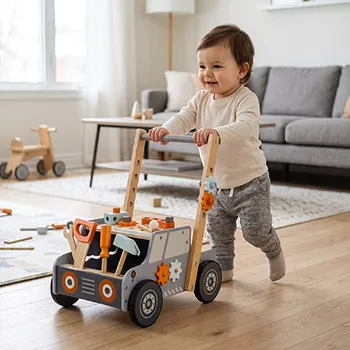
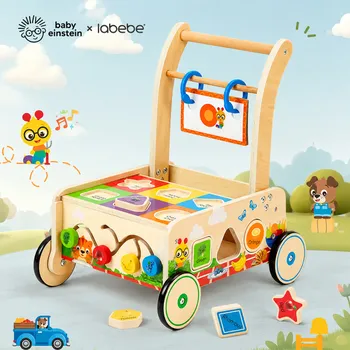
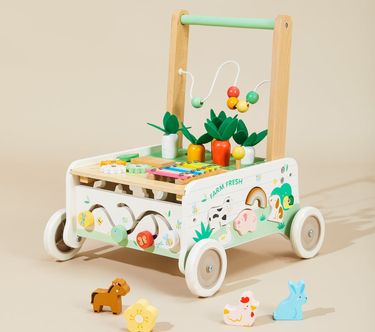
Wooden push walkers are often considered a safer option because of their solid construction. Their slightly heavier weight helps prevent sudden movement and improves stability, reducing the risk of tipping or sliding too fast.
In contrast, lighter designs may move more easily, but they can also be harder for beginners to control—particularly on smooth surfaces like hardwood floors.
Minimalist push walkers without excessive electronic features are also beneficial, as they encourage active movement rather than passive play, supporting more natural walking development.
For parents prioritizing safety and control, a well-balanced wooden push walker is often the more reliable choice.
How to Test a Push Walker’s Safety Before Buying
Understanding how to test a push walker before buying can help avoid common issues. One of the biggest concerns parents have is: “Will this walker move too fast or tip over?”
- Push the walker lightly: if it slides too fast, it may not be safe
- Check stability: gently tilt it to see if it tips easily
- Test handle height: ensure it aligns with the baby’s chest level
These simple checks provide practical insight into baby push walker safety features and help confirm whether the product meets safety expectations.
Best Safe Push Walker Features for Different Home Environments
Different home setups require different considerations when applying how to choose a safe push walker.
For small apartments, compact walkers with stable bases are ideal. They provide control without taking up too much space.
For carpeted homes, slightly lighter walkers may be easier to push. In contrast, for hardwood floors, choosing a push walker with built-in resistance or a heavier frame can significantly improve safety.
In multi-level homes, portability becomes important. A balanced design that is easy to move between floors without sacrificing stability is recommended.
Understanding push walker for carpet vs wood floor differences helps ensure safer use in real-life conditions.
Conclusion
Choosing a push walker is less about extra features and more about core safety design. A well-balanced walker with controlled movement and proper structure can support a baby’s development effectively.
By understanding how to choose a safe push walker, focusing on essential baby push walker safety features, and applying simple testing methods, parents can make informed decisions.
For those looking for thoughtfully designed options, brands like Labebe offer push walkers that combine stability, safety, and practical usability.
Read More
Join labebe today and unlock your welcome discount — a little gift for your little one!

©2025 labebe All Rights Reserved.